
University Special
All you can do is step back in time
Praxis. Oppression. Lived experience. The equity doctrine. Systemic power structures. Hegemonic hierarchies.
By now, many of us are more familiar with the gibberish of contemporary ‘social justice’ progressives than anybody has any need to be. Having successfully colonised academia, it seeped into public institutions and corporate structures, as a vital component of the Age Of Stupid, around the Year Zero of 2014.
But here’s a thing. In 2014, these nonsensical neologisms were already grimly familiar to me from the undergraduate degree course that I took a quarter of a century before that - what is now thirty five years ago.
What brought memories of my varsity days bubbling back to the forefront of my mind?
I was reading Alexandra Wilson’s new book ‘Other People’s Music’, a history of opera in Britain over the last hundred years. It’s a fantastic read, even if opera doesn’t beguile you, because by narrowing her focus to one art form Alexandra provides a definitive account of the arts over the century; how they were and are viewed, how the patronage and public funding models have changed, how ‘elitism’ switched from being a ‘good’ thing to a ‘bad’ thing.
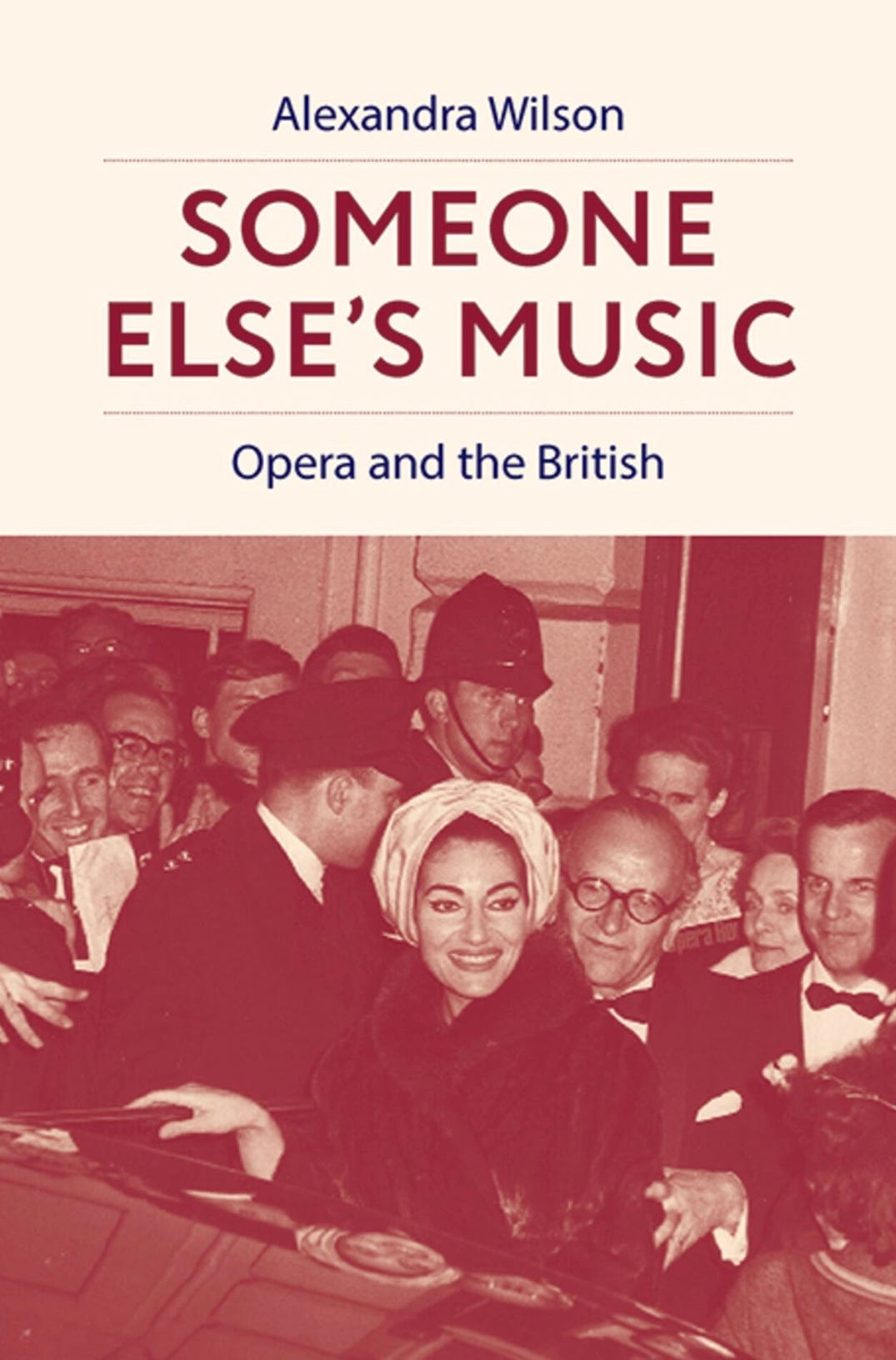
Anyway, there I was happily flicking at my Kindle, when - suddenly and terribly - a familiar name halted me in my tracks; three syllables whispering a dead-leaf crackle down the years. My blood froze in my veins.
‘Su Braden, an artist, critic, and activist, argued in 1978 that high culture was the preserve of a certain social class, and that “The so-called ‘cultured’ people belong mainly to the professional and middle classes which are separate and distinct groups from those who seek to express and improve their condition by cultural means. There are exceptions, of course, but broadly speaking we can say that ‘High Art’ is associated with the middle class and its values and that Community Art is associated with the working class and its values.” Braden characterised community arts using words such as ‘active’, ‘social’,’relevant, ‘working-class’, and ‘concerned with relevance to the community’. Conversely the high arts were ‘inactive,’ ‘asocial’,’aesthetic’, ‘middle-class’, and
‘concerned with missionary zeal for cultural heritage’. For the Arts Council to award 99 per cent of its funding to the latter and only 1 per cent to the former was, she argued, a form of ‘oppression’.
A little later in her book, Alexandra picks up the Braden thread again:
‘Su Braden … had made the astonishing claim in 1979 that the notion that high art could be for the working classes as well as the bourgeoisie was “the great artistic deception of the twentieth century”.’
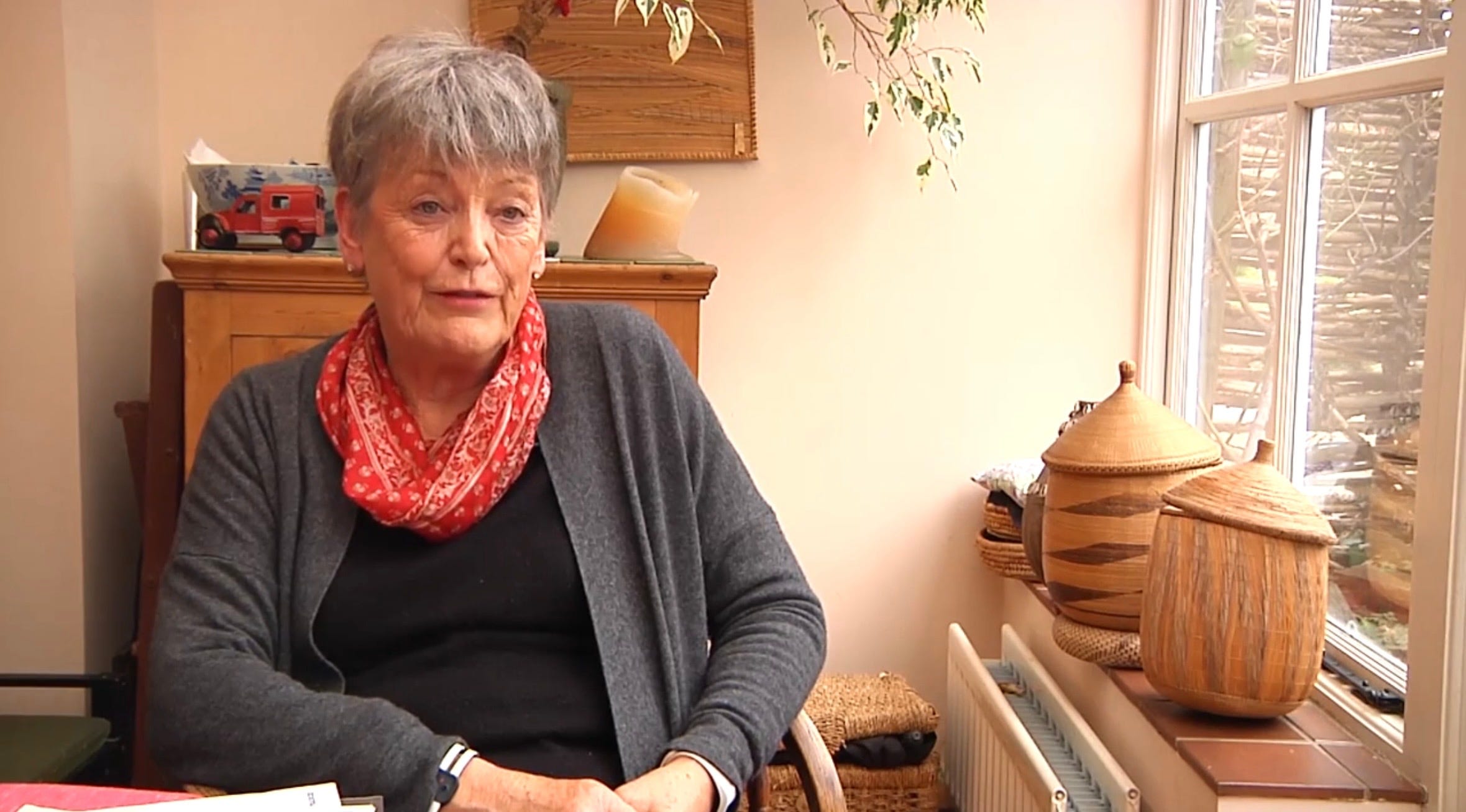
Why did this particular hogwash chill my marrow? Because Su Braden was one of my university lecturers.
A more middle class person you never did see, I can assure you - an almost too-clichéd-to-be-true stereotype of an ‘okay yah’ semi-posh lefty, descending to raise the false consciousness of the proles. I remember a fellow student turning to me after our first lecture from her and spluttering ‘is she for real?’
Don’t just take my word for it. You can see her in action - just search for ‘Su Braden interview’ and follow the link to Vimeo (annoyingly I can’t embed the video here because of its privacy settings.)
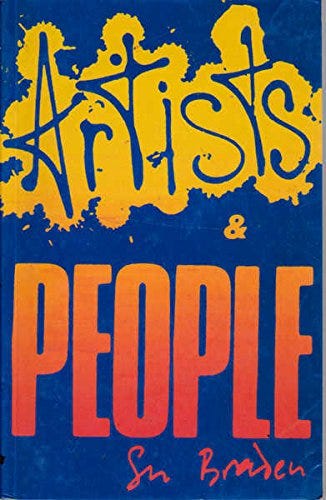
Braden’s books include ‘Committing Photography’ (1983), and ‘Artists And People’ - two things she could never hope to understand, ironically - from which the quotes above were taken by Alexandra.
My encounter with Braden - and my university course in general - was an early collision with progressive guff in its purest form. This was accidental, and painful both at the time and upon reflection, but also strangely providential. It meant that I got a crash course in recognising ‘critical theory’ and its attendant dross. When The Nonsense made its way openly into the mainstream, I was prepared. I had been well and truly stewed in it, after all.
Even other people of a similar age who did similar courses shake their heads and boggle their eyes when I tell them about mine; how we were dispatched to a local bingo hall to report on the oppression of the players; how we were corralled into an impromptu Caribbean carnival to the tune of Arrow’s ‘Hot Hot Hot’ in order to better understand racism or something; or when Su showed us a clumsy link from an episode of BBC2 arts snoozefest The Late Show - from some distant atrocity to a song in the studio from Prefab Sprout - to show us how brainwashed we all were by capitalism.
Now, before I go into further detail, a word of caution - to myself. We put our current selves back into the past, inserting how we think and feel today into our historical memories. Like Ebenezer Scrooge, I’m sure we would get an ugly shock if we could actually see what we said and did way back when. I can’t make myself the hero of this tale, however much I might like to. I swallowed a lot of it down, despite my sceptical temperament. As I said way back at the beginning of Middle Class Holes, I thought that these ‘nice’ semi-posh progressives were ‘my’ people. Some of the time, at least.
But I was unable to argue back articulately. Believe it or not, I was regularly dumbfounded. Though one of the other lecturers once suggested during a power cut that an emergency electricity supply could be obtained by wiring me and Braden up to the college generator, so I must have been vocal in a way, if ineffectually.
Still, what 18-year-old is going to have the strength of character and fortitude of intellect to retaliate against the heavy institutional weight of The Nonsense? It was hard enough then, and now it must be almost impossible. This is one of the reasons that people like Connie Shaw and the new Cambridge Society For Women are so impressive.
I could feel that what we were being taught was rubbish, but I hadn’t been given the tools to refute it. My school education had been haphazard; some parts fantastic, others useless. It was all so random, leaving me - and others - wide open to indoctrination.
This came in the form of deconstruction, post-modernism, cultural relativism, etc. It became second nature to pass everything I saw through the deconstructionist membrane. I couldn’t skim through ‘Mr Messy’ without thinking ‘ah, a wicked attempt by capitalism - by reifying structures of presentation - to enforce hygiene standards on the oppressed, thereby denying conscientisation and true praxis!’
Even today, what feels like a geological epoch later, I can sometimes feel that impulse at work and have to fight it - an academic rattle in the brain to go with all the others.
I got my sneak preview of this double Dutch and its effects beginning in 1989, the distant age when Madchester and Italo-House were in the charts, Margaret Thatcher was in Downing Street, and Sylvester McCoy was in the Tardis.
And the effects it had are a significant pointer for our modern times I think. A maggot in the apple. I saw it turn a sweet bunch of mainly upper working/lower middle class kids, myself included, into jumpy neurotic wrecks with heads fogged up by grievance glue and junk jargon.
Jargon is a smart tactic for the purveyors of crappy ideas, because some abstract concepts genuinely require new or unfamiliar terms to be expressed. What The Nonsense did, cleverly, was to slip in through this crack.
This all happened at -
